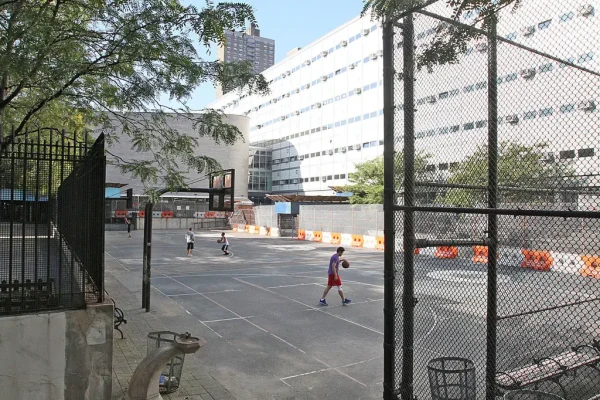
























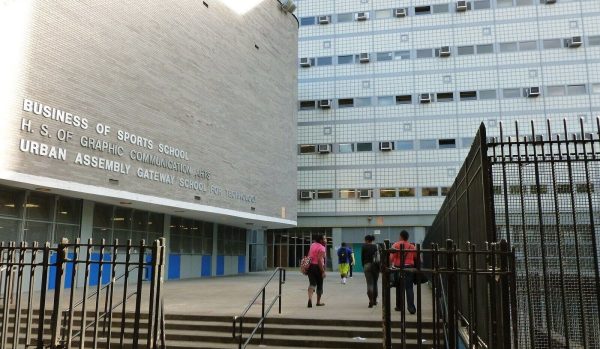
While US History to some might just be a class we sit in with Mr. Dimola or Mr. Lawrence, where we listen to lectures and furiously take notes, often we ignore the impressive history right before us. Many call the building at 439 West 49th Street home, UAG being one of them, but what is the real history behind a school famous enough to get its own New York Times article when it opened back in 1959?
A long row of tenements, crowded homes for the poor, once stood on these blocks but were condemned and demolished to make way for what would become “The New York School of Printing.” Designed for 2,700 students, this new trade school would train students for the expected growth of employment in the printing industry.
Previously, public schools were designed in an ornate Gothic style with stone carvings, but by the 1950s, that was considered outdated. The architects wanted to bring a fresh and more contemporary look to their building.
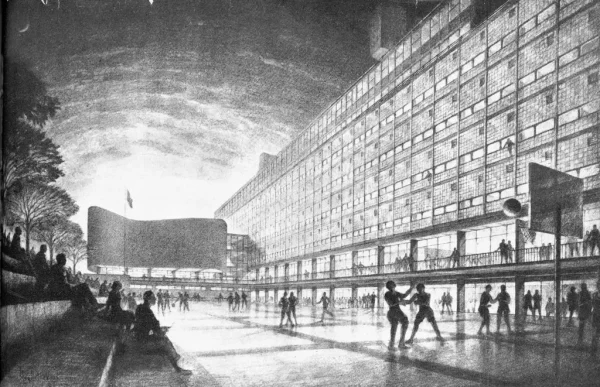
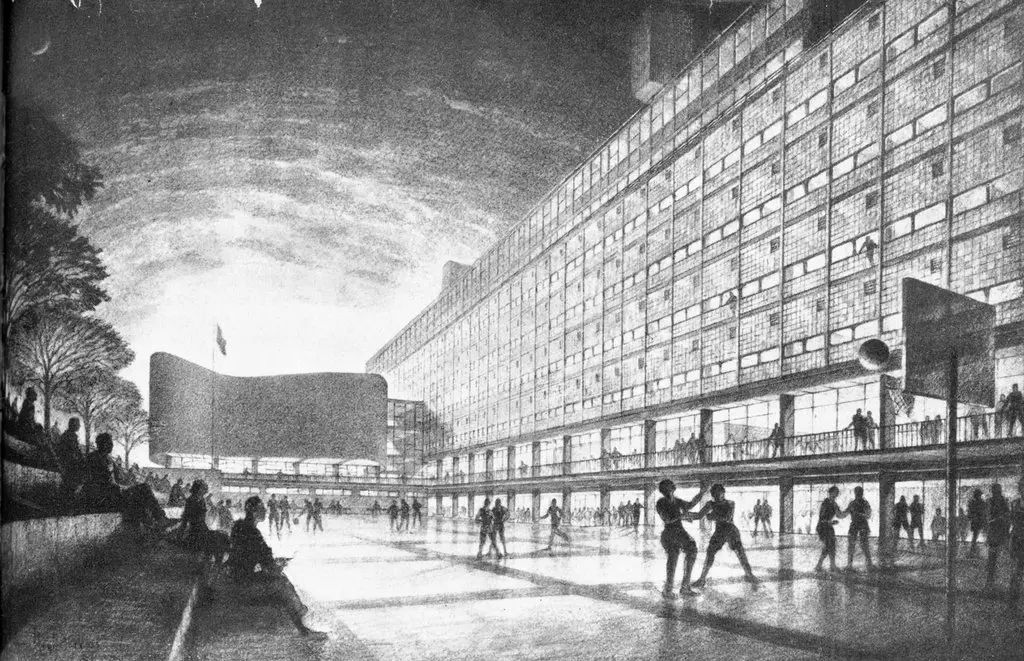
Designed by Hugh Kelly and B. Sumner Gruzen at a cost of $6,200,000, the structure was a long, industrial-style wing of glass block set back, connected to an auditorium wing of cool gray brick shaped like a guitar. It also included a brilliantly colored 60-foot-long mosaic mural by Hans Hofmann. A contemporary look at the time but very unique for a public school. The new minimalism, with an abundance of open space on the building site, allowed for light, air, and outdoor recreational space for students. It consisted of forty-seven shops, twenty-two classrooms, two science laboratories, a medical section, a cafeteria, an auditorium, and a gym, and was the first in the city to have escalators.
The magazine Progressive Architecture considered it “a vibrant note on a depressing street.” In New York 1960 by Robert A. M. Stern, David Fishman, and Thomas Mellins, the school is described as a “bold, imaginative interpretation of International Style modernism.”
It wasn’t an easy journey to opening day. While the architects dreamed of beautiful balconies for the school, New York City Chief Financial Officer Gerosa had some complaints. He stated that elaborate designs are a “waste and extravagance.” “What our city needs are good scholars, not statues and sculptures,” he told The New York Times. While many of the ideas for the school, like balconies on the second floor, got cut, the mural in the lobby got to stay.
The school finally opened in 1960 and at the time was the largest vocational school in the country, according to the NYT. Unfortunately, within 20 years of the school’s completion, more than 50 percent of the city’s industrial jobs were gone and the printing industry was being revolutionized and automated.
The school itself would go on to see many name changes and renovations; however, the beauty and uniqueness of the building remains for staff, students, and passersby to enjoy.