The world was unprepared for the COVID-19 pandemic in 2020. When students were given the option to return to school in the fall of 2020, NYC schools saw a significant drop in attendance as fear and confusion regarding the virus grew. While all staff and students were required to return in person for the fall 2021 school year, there remained a marked decrease in regular attendance. It was not until 2023 that NYC public schools began to see some normalcy; however, attendance rates have still not reached pre-pandemic levels. This trend has concerned both administrators and teachers. Schools now feel an urgent need to return children to the classroom and reduce chronic absenteeism—a term referring to students who miss 10 percent or more of the school year.
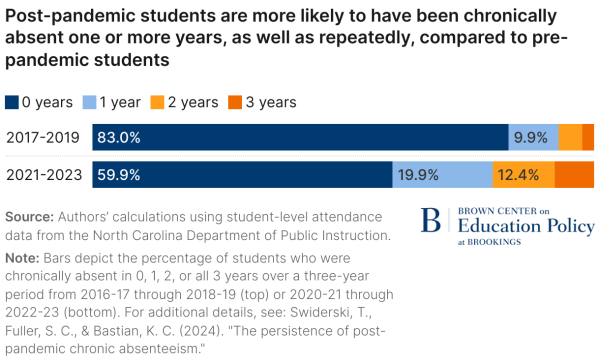
Good attendance is linked with better student performance. Since the pandemic, the high rates of chronic absenteeism have been linked to negative educational outcomes like lower grades, lower test scores, and higher risk of dropping out. Chronically absent students fall behind and struggle to get back on schedule6. School attendance policies are instituted to improve student success.
Why would children skip school in the first place? According to the official NYC attendance policy, health is a reason for an excused absence, but the absence must still be carefully recorded by the school and put on the student’s record. No absence can ever be fully excused and unrecorded1. This strict policy is partially because of chronic absenteeism of students with or with an excuse, which reached staggering rates in NYC since the pandemic and still remain over 30% in 2025.
The 2020 COVID-19 pandemic and lockdown left long-lasting effects on us and our schools to this day. Declining mental health may be related to increased chronic absenteeism. The psychological effect of the pandemic made us more sensitive, stressed, and apprehensive. Studies show that the COVID-19 pandemic has led to depression, anxiety, and even PTSD. A poll conducted by the Department of Psychology of the University of Cyprus showed that 32.3% of recipients experienced anxiety, whereas 16.4% and 23% claimed they’ve shown signs of depression and PTSD respectively. Women and young people were among the groups with the highest stress risk. At the same time, according to the same study, people also at times became more sensitive to their health, which could lead to behaviors associated with personal hygiene3.
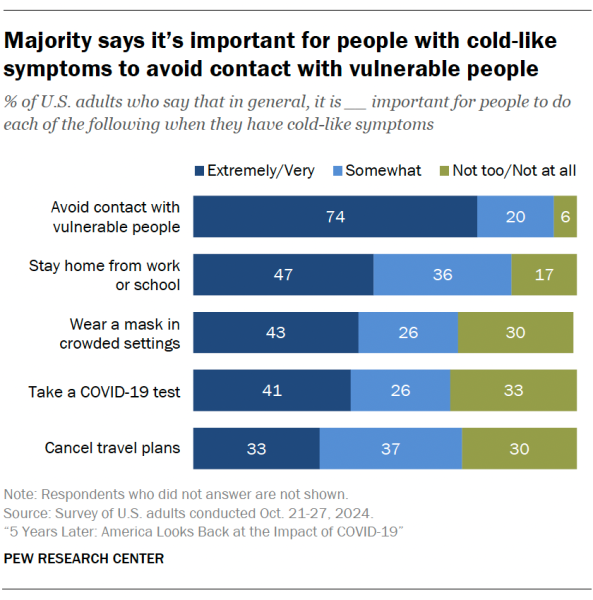
Source: Pew Research Center
More health aware and fearful people have become more common. When it comes to attendance at a workplace or school, for example, according to 2025 research conducted by Pew Research Center, almost half of all surveyed Americans – 47% – claimed that it was extremely important to avoid coming to work or school when feeling sick. While adults may have more motivation in coming to the workplace, despite being sick, because of the living it earns them, the students do not feel the same necessity. No matter if that is an act of responsibility or an excuse, students often skip school whenever they feel sick4. Thus, while avoiding places where you must interact with people is a great safety measure, it can greatly impact the overall attendance of students.
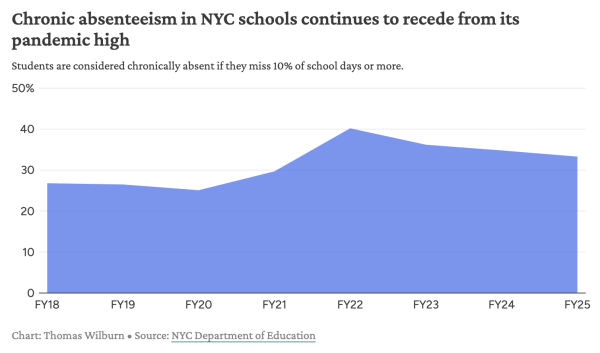
Chart: Thomas Wilburn
Source: Chalkbeat New York
NYC had a staggering 34.8% rate of chronic absenteeism for high schools5. The number of such students has doubled country wide. Ms. D., in a short interview, said that she has observed differences in attendance between now and pre-pandemic. “I think,” she said, “there is more comfort with staying home and [it is] more acceptable [now]. I also think there is a greater tendency for longer periods of absences versus just one day.” This acceptance most likely has its roots in the pandemic. The commonness of children staying at home during the pandemic hasn’t yet fully worn off, so many parents do not mind that as much, not forcing their children to go to school, not caring about the attendance as it is generally seen less important than performance, even if one often depends on the other.
According to the official NYC schools website, while an absence for health or religious or any other good reason could be excused, that doesn’t make it any more favorable. In case of an absence, the school must contact the legal guardians of the child, and that must happen with every single absence. The family must provide a reason for the absence, and, thus, keep their phone numbers and addresses up to date1. All that is done to keep students from skipping classes. Ms. D., when asked about how she as one of the people responsible for the UAG attendance policy was trying to battle the issue of chronic absenteeism said that “the same thing we have always had. We have always gone hard on attendance. I think the major difference has been I am having more conversations with parents and families now. Previously, most of the conversations were with students, but now I am focusing more on the families.”
However, the strict attendance policy isn’t the only way that the NYC officials are trying to improve attendance. Common reasons for NYC students to miss school include health, transportation accessibility, schoolwork and psychological problems. For each, the officials are trying to find solutions that would both solve these problems and keep the children in the school. For example, schools ought to have a parent coordinator, social worker, guidance counselor, or a nurse that can help the family or the sick child. The DOE School Health site also has a list of different health programs and benefits that can provide free medical care for all students. For different types of psychological reasons, free programs like Teenspace and NYCWell exist as well as the 988 Lifeline. Finally, for transportation, many schools provide OMNY or MetroCards, and students are able to take the school bus1.
As shown on graphs, attendance has, in fact, been improving, even if not as steeply as some might have hoped. From the huge drop to 40% of chronically absent students in the year 2022 in NYC, the percentage of chronically absent students has been decreasing, even if it’s not the pre-pandemic levels yet. While it’s hard to determine if it is the result of a stricter attendance policy or the general recovery from the pandemic, children are going to school again and, thus, have a higher chance of earning better grades and succeeding in school, in college, and later in life. Although there is still work to be done, especially when looking at the pre-pandemic numbers, the goal of the attendance policy is slowly being fulfilled.
References:
- https://www.schools.nyc.gov/school-life/school-environment/attendance
- https://www.brookings.edu/articles/student-level-attendance-patterns-show-depth-breadth-and-persistence-of-post-pandemic-absenteeism/
- https://pmc.ncbi.nlm.nih.gov/articles/PMC10889631/
- https://www.pewresearch.org/2025/02/12/americans-views-on-covid-19-risk-and-the-countrys-response-to-health-emergencies/
- https://www.chalkbeat.org/newyork/2025/09/17/nyc-public-schools-chronic-absenteeism-remains-high/
- https://www.osc.ny.gov/files/reports/pdf/missing-school-ny-chronic-absenteeism.pdf