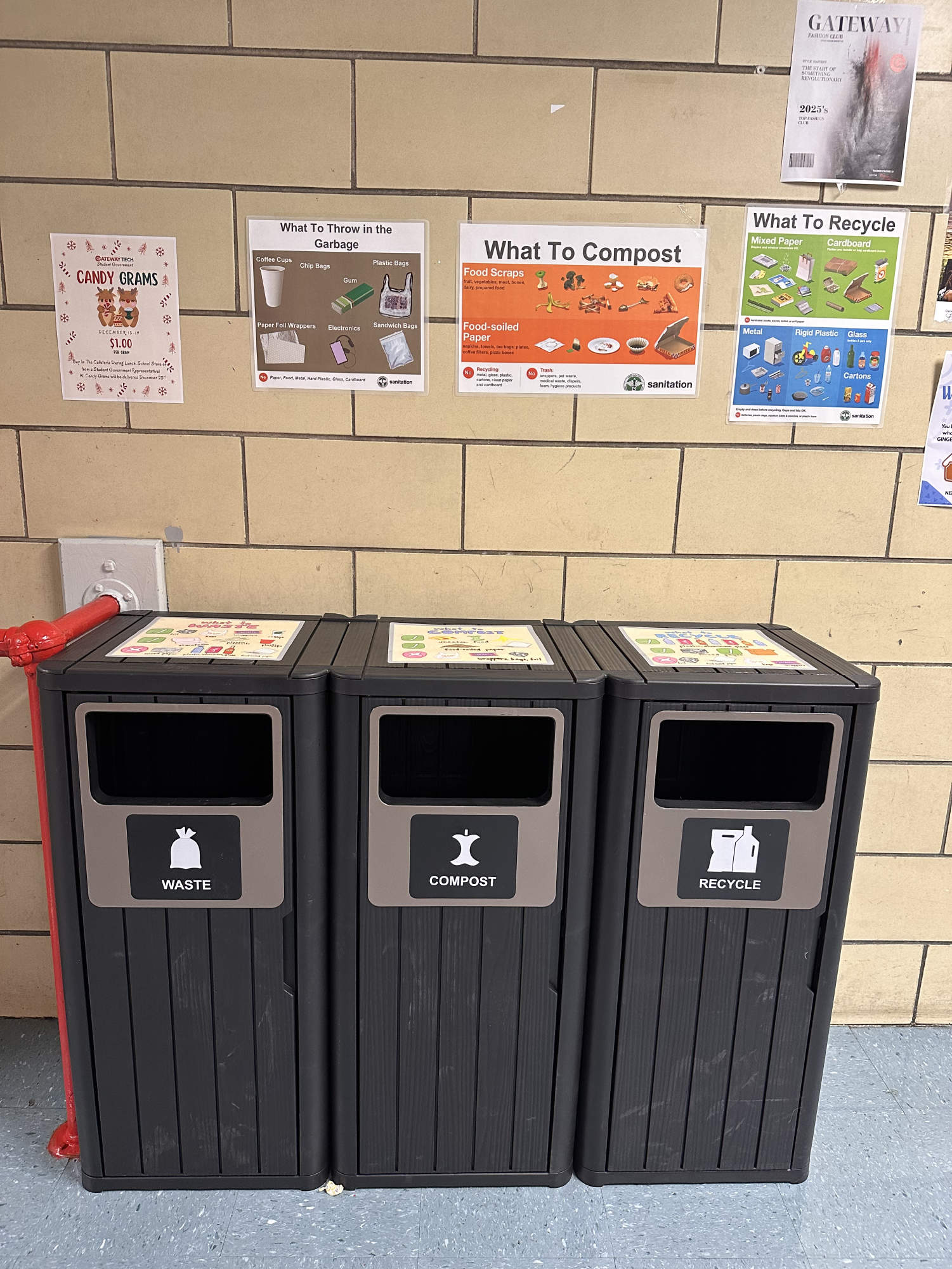
In November 2025, UAG School, in compliance with NYC law, officially joined the city’s mandatory Curbside Composting program. This means that students now have a responsibility to ensure they toss the appropriate items into the correct bins.
Composting recently became mandatory city-wide for all buildings starting October 6, 2024, as part of the Zero Waste Act, an initiative designed to meet the city’s environmental goals. While the law took effect last year, enforcement—with fines imposed for any violations—did not begin until April 1, 2025.
While it may feel like a hassle to some, composting offers numerous benefits and significant improvements to the city’s waste management system, including improving air quality and reducing the size of our landfills. According to the Environmental Protection Agency (EPA), food scraps and yard waste make up about 30% of the materials sent to landfills.
The Benefits of Composting
Composting prevents valuable organic materials from ending up in landfills or trash incinerators. This recycling of nutrients back into the environment not only improves soil health and prevents soil erosion but also enhances water quality and supports more sustainable agriculture. Ultimately, this leads to a more resilient ecosystem over time. Not composting, conversely, results in valuable resources being lost to the local environment, where they contribute to carbon emissions that worsen climate change.
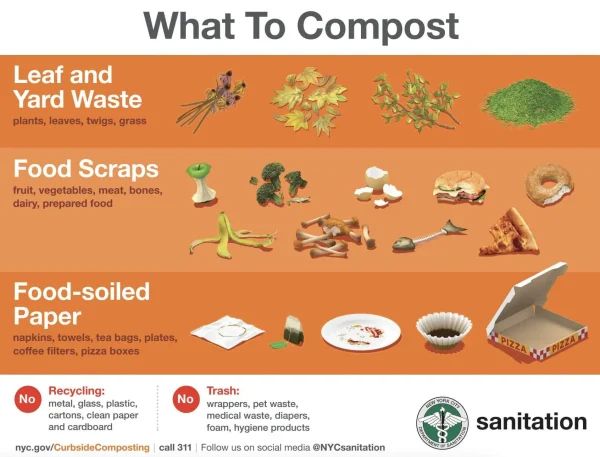
Knowing What to Compost
Of course, it’s important to be informed on what materials can be composted. Only organic materials should be composted, which are divided into “Browns” (carbon-rich materials) and “Greens” (nitrogen-rich materials).
|
Category |
Material Type |
Examples |
|
Browns (carbon-rich materials) |
Dry, fibrous materials |
Uncolored paper, unwaxed cardboard (no tape or glue), dry leaves, wood chips, twigs, and plant stalks. |
|
Greens (nitrogen-rich materials) |
Moist, fresh materials |
Fruit and vegetable scraps, grass clippings, coffee grounds and paper filters, and eggshells. |
Ideally, there should be a balance of both Browns and Greens when composting. Materials to avoid include plants/grasses treated with herbicides or that have diseases, painted wood, glossy paper, Styrofoam, plastic, and produce stickers. Students should be mindful of what items they put into the compost bin.
The Student Experience
What does composting look like for the average UAG student? When finishing your deli breakfast, remember: don’t toss that leftover bagel or bacon and egg sandwich in the regular trash—even your average morning meal can be composted.
When students were asked their thoughts on the new system, responses were mixed:
- One student noted that while they rarely eat lunch at school, it was nice to have the option of composting when they brought in outside items.
- Another student stated they didn’t mind the new bins and appreciated that the school was trying to recycle, but mentioned wishing there were more bins around, suggesting replacing some existing trash cans on the sixth floor.
- A third student agreed the bins on the seventh floor were convenient but felt they were too small and were of the opinion that “nobody really uses them.”
While it will take some time for New York City to see the results of this initiative, the city hopes to make a positive impact on the fight against waste and climate change.
Sources: