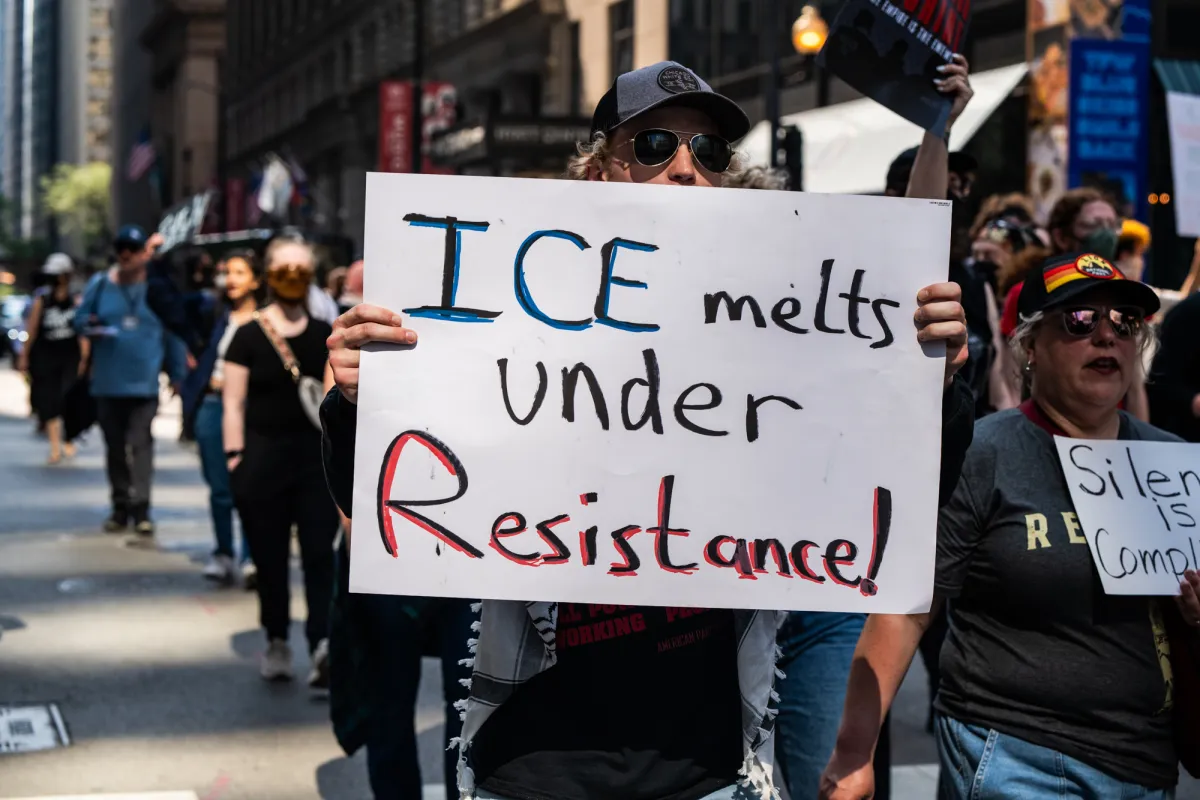
On December 7, 2025, a rally formed in Astoria, Queens, following the detention and separation of a 6-year-old boy and his father by U.S. Immigration and Customs Enforcement (ICE) agents. The incident occurred after the family attended what was described as a routine check-in at 26 Federal Plaza.
According to CBS, both individuals were taken into custody despite attending their scheduled appointment. The child was later transferred to the Office of Refugee Resettlement, while the father was moved to an adult detention center upstate. Witnesses and community members expressed shock, stating that the family had followed every legal requirement, making the sudden separation feel unnecessary and deeply unsettling. Parents, school staff, and neighbors described the situation as traumatic, emphasizing that even in a designated “sanctuary city” like New York, undocumented families can still be targeted without warning and without regard for the emotional well-being of the children involved.
This event understandably raises serious questions for UAG students: are the people I know at risk, and am I at risk?
Understanding ICE and Risk
The actions of ICE and Customs and Border Protection (CBP), often discussed in relation to President Donald Trump’s policies, are frequently misunderstood by the public.
U.S. Immigration and Customs Enforcement (ICE) was established in March 2003 under the Department of Homeland Security (DHS). Its presence in New York City is notable because the city’s “sanctuary” status—which limits local law enforcement cooperation with federal agents—does not prevent federal ICE agents from conducting enforcement operations.
Any individual who does not possess U.S. citizenship or legal permanent residency is generally considered at risk of civil immigration enforcement. Crucially, the federal mandate makes no exception for age, meaning children and teenagers without legal status are included.
The process to legally immigrate and ultimately become a citizen is often lengthy. While applying for naturalization (citizenship) can take less than two years after meeting the residency requirement (typically five years as a legal permanent resident), the initial time it takes to obtain a green card can span decades for many due to limited visa availability and country-specific quotas.
The Role of the Supreme Court and Fourth Amendment Rights
Many people assume the Supreme Court would oppose aggressive immigration enforcement because it appears to challenge the Fourth Amendment, which protects against unreasonable searches and seizures.
However, the Supreme Court recently addressed a related issue in NOEM v. VASQUEZ PERDOMO, a shadow-docket case concerning whether ethnicity, language, and location can be used as factors in searches and seizures. The Court ultimately ruled 6–3 in favor of allowing this consideration in some circumstances.
The three justices who provided written explanations offered starkly different views:
- Justice Kavanaugh (Majority Support): Argued that while “apparent ethnicity alone cannot furnish reasonable suspicion,” he claimed it can be a “relevant factor” when combined with others.
- Justices Sotomayor and Jackson (Dissent): Justice Sotomayor warned against living in a country where the government can seize anyone based on appearance, stating the Fourth Amendment forbids seizures based on traits shared by “a very large category of presumably innocent” people.
The result confirms that ICE has a mission to detain and/or deport non-citizens, and this can be based on immigration status regardless of a criminal record. The Supreme Court’s decision allows enforcement actions to continue even when they involve factors that critics argue amount to racial profiling.
Know Your Rights: Responding to ICE
Understanding your rights is essential for anyone who may encounter an ICE agent.
What to Do if ICE Shows Up at Your Door
- Do Not Open the Door. ICE agents generally need a judicial warrant signed by a judge to enter a private residence.
- Beware of Administrative Warrants. ICE agents may possess a Form I-200 or Form I-205 (administrative warrants) that are signed by an ICE officer, not a judge. These warrants do not give them legal permission to enter your home without your consent.
- Action: Speak to the agent through the door. Ask them to slide the warrant under the door. Only open the door if the warrant is signed by a judge.
What to Do if You are Detained by ICE
- The Right to Remain Silent: You have the right to remain silent to any questions asked by an ICE agent or officer about your citizenship, immigration status, or national origin.
- Action: Clearly state, “I choose to remain silent,” and ask to speak with an attorney. Do not sign any documents without a lawyer present.
- Stay Calm: It is crucial to remain calm and do not attempt to run away from agents. Running may be used as grounds for further detention or charges.
What to Do if a Family Member is Detained by ICE
- Get the A-Number: When you are able to contact your family member, ask for their A-Number (Alien Registration Number). This is an 8- or 9-digit number assigned upon detention.
- Locate Them: Use the A-Number on ICE’s official website to locate the detention center where they are being held.
While it is easy to be overwhelmed by fear and dread given the number of arrest videos and numerous news articles, knowing your rights and that you are safe and protected in school is a way to get through this difficult period in time.
For further information to help protect yourself and loved ones, visit the following websites:
- Know Your Rights
- What to do after a friend or family member is detained by ICE/Immigration)
- Know Your Rights: What to Do if You Are Arrested or Detained by Immigration
- Know Your Rights with ICE