





























Sick of staying up way too late doomscrolling? Tired of missing your alarm, only to have your parents get a text from Ms. D.? Do you feel like there is absolutely nothing you can do to improve the balance of your life? Then I have a book that will help you hack your brain and level up your life.
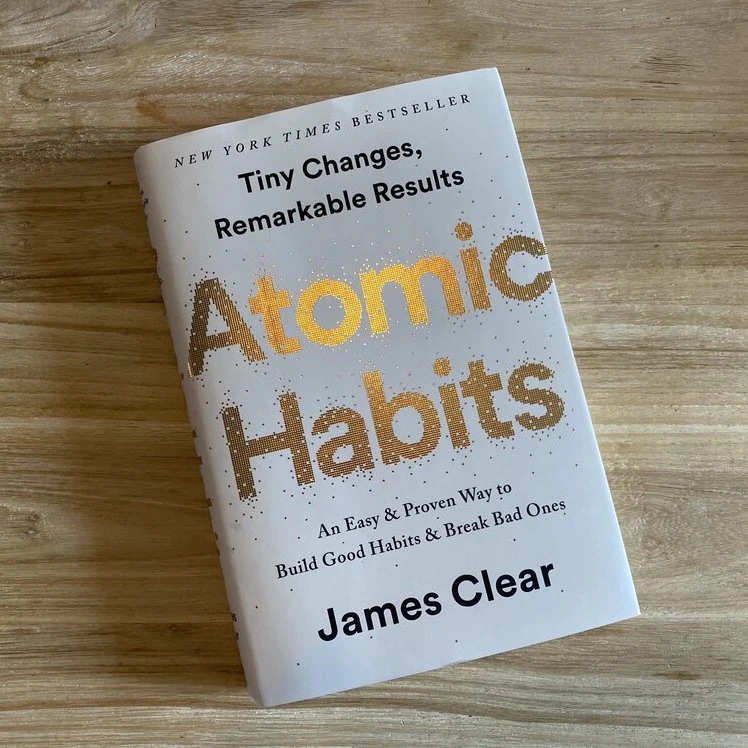
Atomic Habits, written by James Clear, explains how small, incremental improvements and changes in your daily routines can lead to surprisingly big outcomes. The book argues that massive success doesn’t come from massive action, but from consistent, small shifts.
Clear outlines that all habits—good or bad—occur across four stages, which he divides into two key phases:

- Cue signals your brain to initiate a behavior, and recognizes potential reward.
- Hearing a notification from your phone signals that you should check your phone
- Craving is the desire to change our internal state, it is the motivational force driving every habit.
- You think it could be the girl you like texting back so you crave to check it (even if it isn’t the best time.)
- Response is the execution of the habit
- You easily take the phone out of your pocket, and check what it was
- Reward is the goal of every habit. It provides satisfaction, and helps us learn which actions are worth repeating in the future, whether consciously, or subconsciously.
- You see that it was just your friend asking you to hop on the game, but you still got the rush of dopamine, along with responding to the habit, in hopes of a greater reward **
The Four Laws of Behavior Change
The key to Clear’s methodology is manipulating this cycle, which Clear calls the Four Laws of Behavior Change:
- To begin a new habit, you must think about how to increase the attractiveness and ease of the stages (make it Obvious, Attractive, Easy, and Satisfying).
- To break a bad habit, you must make these stages as unappealing and difficult as possible (make it Invisible, Unattractive, Difficult, and Unsatisfying).
For example, say you have a bad habit of playing video games when you come home instead of doing homework. To stop this, you must first identify which stage is causing the problem. The issue in this scenario could reside in the Cue stage. Every day when you enter your room to set down your bag, you see your PC or console, immediately cueing your brain to think about video games and distracting you from homework. To prevent this, you might implement an “Invisibility” strategy by avoiding stepping foot into your room before you’ve completed your homework at a designated workspace, like the kitchen or living room. Being able to identify where the problem resides makes planning and fixing the habit much easier.
The book also teaches strategies such as Habit Stacking, which is the tactic of pairing a new, desired habit with a habit you already have in place. For instance, if you wanted to start drinking more water, you could stack it onto your existing routine: “Every time I walk into the cafeteria before school starts, I will drink a cup of the free water.” This method slowly builds a new habit on top of a stable, existing one.
As a student, implementing these principles can help not just improve your grades, but also boost your overall motivation. This book doesn’t tell you to “just work harder.” It provides actionable steps that will make your life easier, more rewarding, and dramatically improve your long-term outcomes.
My Thoughts: A Strategy That Works
For me, Atomic Habits stands out from other self-help books because it gives you concrete, actionable strategies that lead to noticeable change. I often find myself not wanting to do something small, such as putting away the clothes on my bed, but thinking about the power of small improvements helps me overcome challenges. I’ve also been able to successfully start and stop many habits by simply identifying where the problem was in the four-stage cycle and using Clear’s strategies to work smarter, not harder.